



Best EV Chargers for Home Use in the UK (2026 Guide)
If you’re searching for the best EV charger for your home in the UK, you’re not alone. More drivers are moving to electric vehicles, smart tariffs are becoming more popular, and homeowners increasingly want a charger that’s reliable, easy to use, and genuinely cost-effective to run.
This 2026 guide is written for real UK homes and real daily driving. Rather than chasing hype, we focus on what actually matters: charging speed, smart tariff compatibility, tethered vs untethered practicality, and how to pick a charger that fits your driveway, your energy setup, and your budget.
Importantly, every charger featured in this guide is a model Evergy supplies, so when you’re ready to choose, you can click through to a product page with the right spec, warranty info, and UK support.
What to look for in an EV charger going into 2026
The best home EV charger in 2026 isn’t necessarily the one with the longest feature list. It’s the one that fits your home’s electrical supply, supports the way you want to charge, and helps you take advantage of cheaper electricity when it’s available.
Charging speed: why 7kW is still the UK standard
For the vast majority of UK properties, a 7.4kW (single-phase) EV charger remains the most practical choice. It’s fast enough for overnight charging and suits typical daily mileage, making it ideal for most homeowners who want a consistent, dependable home charging routine.
While 22kW (three-phase) chargers can be a great solution in the right setting, they’re typically more relevant for properties with three-phase supply or specific use cases where faster home charging is genuinely required.
Smart tariffs: where the real savings are made
If your goal is to reduce the cost of charging, your electricity tariff often matters as much as the charger itself. Many UK households now use (or are considering) smart EV tariffs that offer cheaper off-peak electricity, usually overnight. When your charger and tariff work well together, you can shift most charging to lower-cost hours without changing your routine.
Some chargers rely mainly on manual schedules and timers. Others are designed to make smart charging easier, particularly if your priority is maximising off-peak charging windows and keeping your costs predictable.
Typical home EV charging costs in the UK
Charging costs vary by vehicle efficiency, your local electricity rates, and how consistently you charge during off-peak hours. As a simple rule of thumb, EVs commonly achieve roughly 3–4 miles per kWh, which means your cost per mile can drop significantly when you use cheaper overnight rates compared with standard daytime electricity.
This is exactly why tariff-friendly chargers and sensible scheduling are such important decision factors in 2026.
Tethered vs untethered: choose based on your driveway, not trends
This is one of the biggest decisions buyers face:
- Tethered chargers (fixed cable) are quicker day to day — you simply park, plug in, and charge.
- Untethered chargers (socketed) look cleaner and give flexibility if you want to use different cable lengths or swap cables in the future.
Neither option is “better” universally. The right answer depends on ease of use, where the charger will be mounted, and how you want the setup to look on your home.
Solar compatibility and future-proofing
Even if you don’t have solar panels today, many homeowners want a charger that won’t limit future upgrades. If solar is on your roadmap, it’s worth choosing a charger that can adapt to changing energy needs, integrates well with smart scheduling, and is backed by strong software support.
Reliability, updates and UK support
In practice, the best ownership experience comes from a charger that quietly works every day. That means dependable hardware, regular firmware updates, and responsive support. For most people, these factors matter more than novelty features — especially over the life of the charger.
Best EV chargers for UK homes in 2026
The best EV charger for your home depends on how you charge, the tariff you’re on, and how much flexibility you want going forward. The chargers below are all widely used in the UK, well supported, and suited to real-world home charging rather than niche or commercial use.
Each option featured here is supplied by Evergy, allowing you to explore full specifications, warranty details, and compatible accessories when you’re ready to choose.
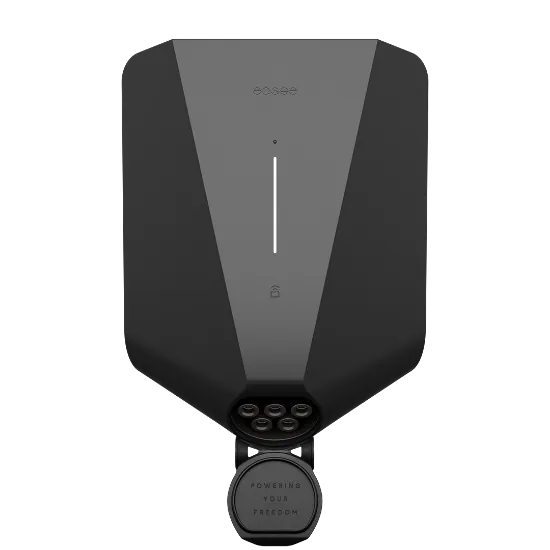
Easee One 7.4kW – Best all-round EV charger for UK homes
The Easee One 7.4kW EV charger remains one of the most popular choices for UK homeowners going into 2026, thanks to its compact design, strong smart features, and broad compatibility with modern EVs and tariffs.
Designed specifically for single-phase residential properties, Easee One delivers reliable overnight charging while keeping day-to-day use simple. Its small footprint makes it discreet on most driveways, while the internal technology allows it to adapt to different charging scenarios without being overcomplicated.
View Easee One EV charger at Evergy
Who the Easee One is best suited to
- Homeowners looking for a clean, modern charger with minimal visual impact
- Drivers who want smart charging without excessive complexity
- Households planning to stay on single-phase supply
- Those who want flexibility around tethered or untethered setups
Smart charging and tariff compatibility
Easee One supports smart scheduling through its app, allowing users to control when charging takes place. This makes it well suited to off-peak charging strategies, where electricity costs are lower overnight.
Rather than relying on complex automation, Easee focuses on reliable, predictable scheduling — a benefit for users who prefer to understand and control exactly when their vehicle charges.
Charging costs in everyday use
When paired with an appropriate electricity tariff, Easee One can help keep charging costs consistent and manageable. Overnight charging at off-peak rates typically allows most drivers to cover daily mileage at a much lower cost than public charging, without the need to change driving habits.
For many households, this balance of control and simplicity makes Easee One an excellent long-term option.
Tethered vs untethered options
Easee One features a unique locking socket, allowing you to use it as a flexible untethered charger or permanently lock your cable in place to create a convenient tethered setup
The untethered version is particularly popular where a clean finish is preferred, while the tethered option offers quicker plug-in convenience for daily use.
Reliability and long-term ownership
Easee One benefits from ongoing firmware updates and strong UK support, helping ensure compatibility with new vehicles and energy setups over time. Its reputation for reliability and ease of use is a key reason it remains a benchmark charger for UK homes heading into 2026.
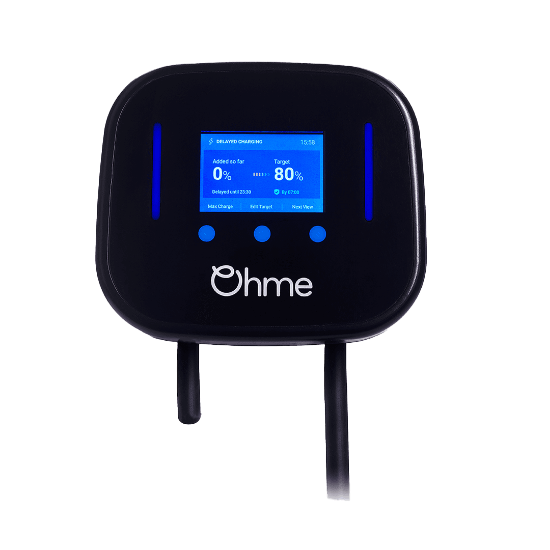
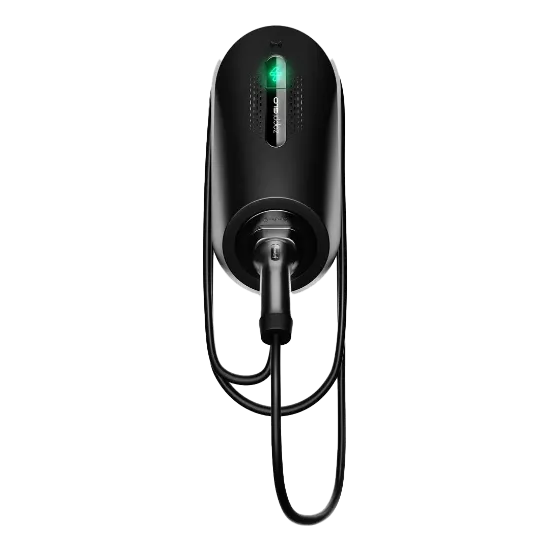
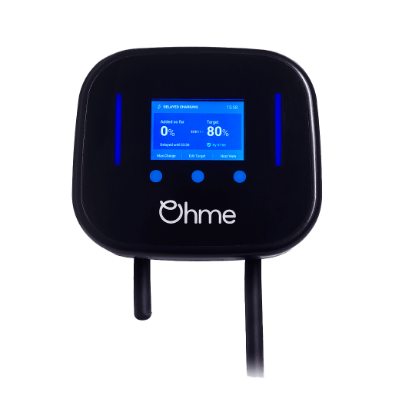
Ohme Home Pro & Ohme ePod – Best EV chargers for smart tariffs and lower charging costs
If your main goal is to reduce the cost of charging your EV at home, the Ohme Home Pro and Ohme ePod are two of the strongest options available to UK homeowners in 2026.
Ohme chargers are designed with smart tariff integration at their core. Rather than simply charging on a fixed timer, they work with tariff data to automatically schedule charging when electricity is cheapest, helping drivers take full advantage of off-peak rates without constant manual adjustments.
View Ohme Home Pro at Evergy
View Ohme ePod at Evergy
Ohme Home Pro vs Ohme ePod – what’s the difference?
Both chargers share the same smart charging technology, but they suit slightly different preferences:
- Ohme Home Pro – A tethered charger with an integrated screen, ideal for users who want quick visual confirmation of charging status and a fixed cable ready to use.
- Ohme ePod – An untethered, socketed charger with a compact design, offering a cleaner look and flexibility over cable choice.
The choice between the two usually comes down to whether you prefer the convenience of a built-in cable and display, or a more discreet untethered installation.
Why Ohme excels with smart EV tariffs
Ohme chargers are the gold standard for tariff integration. They are the preferred partner for Intelligent Octopus Go and OVO Charge Anytime, communicating directly with these providers to unlock the cheapest possible rates. Instead of just setting a timer, the Ohme server speaks to your energy provider to automatically charge during the greenest, cheapest slots, often saving drivers hundreds of pounds a year compared to standard "dumb" scheduling.
Real-world charging costs at home
When paired with an off-peak tariff, Ohme chargers can significantly reduce the cost per mile compared with daytime electricity or public charging. For many EV drivers, overnight charging at cheaper rates allows daily driving needs to be covered at a fraction of the cost of rapid charging on the public network.
This makes Ohme an excellent choice for commuters and households with regular charging routines who want to minimise energy costs without constantly managing schedules.
Ease of use and long-term ownership
Despite their advanced automation, Ohme chargers are designed to be straightforward to live with. Once set up, most users rarely need to interact with the app beyond occasional checks or changes.
With regular software updates and strong UK support, both the Home Pro and ePod are well suited to long-term home ownership and evolving tariff structures heading into 2026.
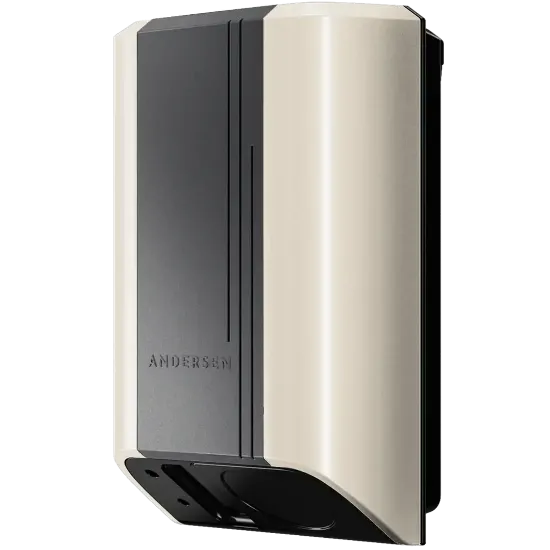
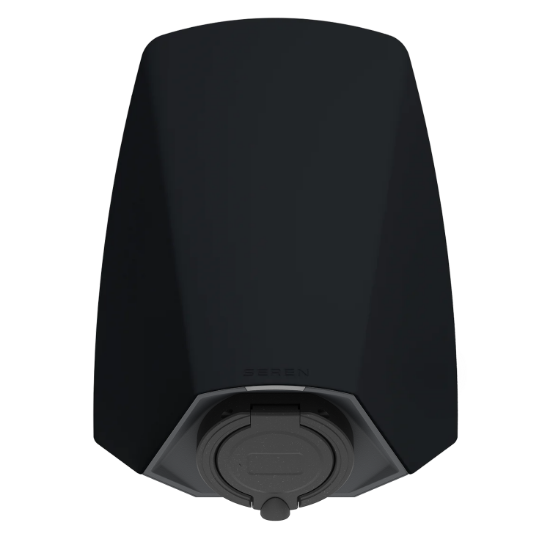
Andersen Quartz – Best premium design EV charger for UK homes
For homeowners who want an EV charger that blends into its surroundings rather than standing out, the Andersen Quartz is one of the most design-focused chargers available in the UK going into 2026.
Unlike more utilitarian chargers, the Andersen Quartz is built with appearance firmly in mind. Its clean lines, customisable finishes, and concealed cable storage make it particularly popular for high-end homes, visible driveways, and properties where aesthetics are just as important as functionality.
View Andersen Quartz EV charger at Evergy
Who the Andersen Quartz is best suited to
- Homeowners who prioritise design and build quality
- Properties with prominent or front-facing driveways
- Those who want an untethered look with hidden cable storage
- Buyers willing to invest more for aesthetics and materials
Design-led construction and customisation
The Andersen Quartz is available in a wide range of finishes, allowing it to complement brickwork, cladding, or exterior joinery. The cable is stored neatly behind a front panel when not in use, maintaining a tidy appearance without the need for external hooks or holders.
This makes the Quartz particularly appealing where visual impact matters, such as period properties, new-builds with strict design standards, or homes with landscaped driveways.
Smart charging and everyday usability
While the Andersen Quartz focuses heavily on design, it still delivers reliable smart charging for everyday use. Users can schedule charging to align with off-peak electricity rates, helping to keep running costs under control when paired with the right tariff.
Rather than competing on automation alone, the Quartz focuses on stability and simplicity — making it a good fit for users who want smart features without constant app interaction.
Charging costs and tariff considerations
In practical terms, charging costs with the Andersen Quartz are similar to other quality 7kW home chargers when used with a suitable tariff. Overnight charging at off-peak rates remains the most cost-effective way to charge, and the Quartz supports scheduled charging to make this easy.
As with all home chargers, the key to lower running costs lies in tariff choice and charging habits rather than the charger alone.
Is the Andersen Quartz right for everyone?
The Andersen Quartz is not designed to be the cheapest EV charger on the market, nor is it aimed at buyers who want the most automation-heavy experience. Its strength lies in design, materials, and presentation.
For homeowners who value aesthetics and want a charger that enhances the look of their property, it remains one of the most distinctive options available in 2026.
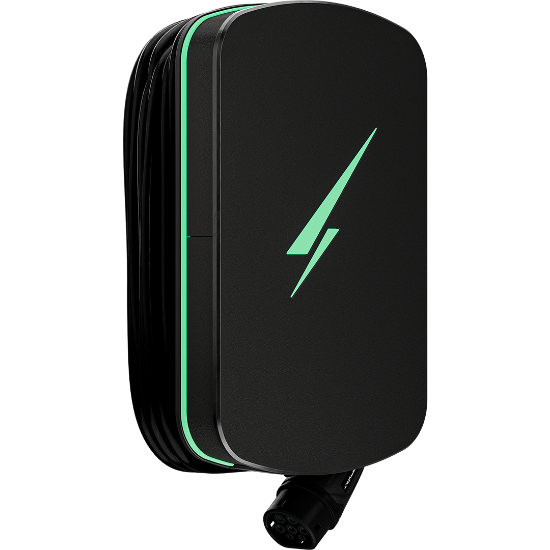
Hypervolt Home 3 Pro – Best EV charger for app-led control and smart features
The Hypervolt Home 3 Pro is a strong choice for UK homeowners who want a modern EV charger with a polished app experience and a wide range of smart features, without sacrificing everyday usability.
Heading into 2026, more drivers expect their EV charger to feel like a connected home device rather than a simple power outlet. Hypervolt leans into this expectation, offering clear app-based control, smart scheduling, and visual feedback that appeals to tech-focused users.
View Hypervolt Home 3 Pro at Evergy
Who the Hypervolt Home 3 Pro is best suited to
- Homeowners who want a strong app experience and visual feedback
- Drivers who prefer managing charging via their phone
- Households with multiple smart home devices
- Users who value detailed control without excessive complexity
App control and smart charging features
The Hypervolt app allows users to monitor charging, set schedules, and manage energy use with ease. This makes it well suited to off-peak charging strategies, where users want to ensure charging takes place during cheaper electricity periods.
Rather than fully automating decisions around tariffs, Hypervolt gives users clear visibility and manual control, which many prefer when balancing charging needs with household energy use.
Charging costs and tariff compatibility
When used alongside a suitable electricity tariff, the Hypervolt Home 3 Pro enables efficient overnight charging, helping to keep costs predictable and lower than public charging alternatives.
Its scheduling features make it easy to avoid higher daytime rates, ensuring most charging takes place during off-peak windows where available.
Design, build quality and everyday use
The Home 3 Pro features a clean, contemporary design with subtle lighting that provides clear charging status without being intrusive. This makes it a good fit for both modern and traditional properties.
Build quality is robust, and the charger is designed to withstand everyday outdoor use in UK conditions.
Long-term ownership and support
Hypervolt continues to refine its software through updates, helping ensure compatibility with future vehicles and energy setups. Combined with UK-based support, this makes the Home 3 Pro a reassuring long-term choice for homeowners looking ahead to 2026 and beyond.
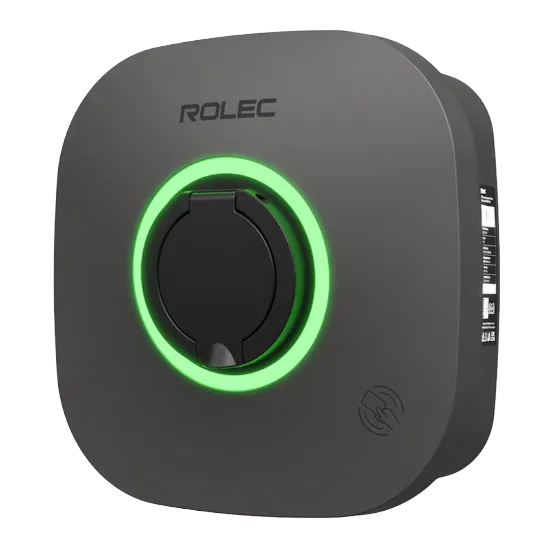
Rolec EVO – Best value smart EV charger for UK homes
The Rolec EVO is a strong option for homeowners who want a reliable, smart EV charger without paying a premium for features they may never use. Heading into 2026, it remains a popular choice for cost-conscious buyers who still expect solid performance and smart functionality.
Rolec has long been established in the UK charging market, and the EVO range builds on that experience with a straightforward, no-nonsense approach to home EV charging.
View Rolec EVO 7.4kW at Evergy
View Rolec EVO 22kW at Evergy
Who the Rolec EVO is best suited to
- Homeowners looking for a more affordable smart EV charger
- Drivers who want app-based scheduling without unnecessary extras
- Households upgrading from basic charging solutions
- Properties where value and reliability matter most
Smart charging and everyday control
The Rolec EVO offers smart scheduling and remote control via its app, allowing users to charge overnight and avoid higher daytime electricity rates. While it may not offer the same depth of automation as some premium models, it covers the essentials well.
For many users, this balance of simplicity and functionality is exactly what’s needed for everyday home charging.
Charging costs and tariff considerations
When paired with an appropriate electricity tariff, the Rolec EVO allows homeowners to take advantage of off-peak charging, helping keep running costs lower than public charging.
As with other chargers in this guide, the biggest savings come from consistent overnight charging habits rather than the charger’s headline features.
7kW vs 22kW Rolec EVO options
The Rolec EVO is available in both 7.4kW and 22kW variants. For most UK homes, the 7kW version remains the most practical and cost-effective choice.
The 22kW model is better suited to properties with three-phase supply or specific requirements where faster charging is genuinely beneficial.
Is Rolec EVO the right choice for you?
If you’re looking for a dependable smart charger that delivers good value and avoids unnecessary complexity, the Rolec EVO is a sensible option heading into 2026. It focuses on the fundamentals of home charging, making it a strong contender for many UK households.
Tethered vs untethered EV chargers – which is better in 2026?
One of the most common questions UK homeowners ask when choosing an EV charger is whether to go for a tethered or untethered model. In 2026, both options remain popular, and the right choice depends far more on how you use your driveway than on trends or appearances.
What is a tethered EV charger?
A tethered EV charger has a permanently attached charging cable. This means you simply park your vehicle, plug in, and start charging.
Benefits of tethered chargers:
- Quicker and more convenient for daily use
- No need to retrieve or store a separate cable
- Ideal for households charging every day or every night
Tethered chargers are often favoured by commuters who value speed and simplicity, particularly during winter months or bad weather.
What is an untethered EV charger?
An untethered EV charger uses a socket, requiring you to supply and connect your own charging cable. While this adds a small extra step, it offers greater flexibility.
Benefits of untethered chargers:
- Cleaner, more discreet appearance when not in use
- Flexibility to use different cable lengths
- Easier to swap cables if vehicles change
Untethered chargers are often chosen where aesthetics matter or where the driveway layout benefits from cable flexibility.
Which option makes more sense in 2026?
In practical terms, neither option is universally better. The right choice depends on your priorities:
- If convenience is your priority, a tethered charger is hard to beat.
- If appearance and flexibility matter more, an untethered charger is often the better fit.
Many popular chargers, including models from Easee, Ohme, Hypervolt, and Andersen, are available in both configurations, allowing you to prioritise usability or aesthetics without compromising on performance.
Impact on charging costs and tariffs
It’s worth noting that the choice between tethered and untethered has no direct impact on charging costs. Costs are driven by your electricity tariff, vehicle efficiency, and when you choose to charge rather than the cable setup.
The most cost-effective approach in 2026 remains consistent overnight charging during off-peak hours, regardless of charger type.
Is a 7kW EV charger still enough in 2026?
As electric vehicles continue to improve and battery sizes increase, many homeowners wonder whether a 7kW EV charger will still be sufficient in 2026. For most UK households, the answer remains a clear yes.
The reality of home charging hasn’t changed significantly. The majority of UK homes are single-phase, and most daily driving distances can easily be covered by overnight charging using a 7.4kW charger.
What a 7kW charger delivers in real terms
A typical 7kW home charger can add around 25–30 miles of range per hour, depending on the vehicle. Over an overnight charging window, this is more than enough to fully recharge most EVs used for everyday driving.
For drivers covering average daily mileage, a 7kW charger comfortably supports routine charging without requiring faster, more complex installations.
When does a 22kW charger make sense?
While 22kW chargers are sometimes seen as “future-proof”, they are only practical in specific circumstances:
- The property has a three-phase electricity supply
- The vehicle supports higher AC charging speeds
- There is a genuine need for faster turnaround between charges
For most residential properties, these conditions aren’t met, and installing a 22kW charger can add unnecessary cost without delivering meaningful day-to-day benefits.
Charging costs: speed vs efficiency
From a cost perspective, charging speed alone doesn’t reduce your electricity bill. In fact, the biggest savings come from charging during off-peak hours rather than charging faster.
A 7kW charger paired with a smart tariff often delivers lower running costs than a faster charger used during higher-rate periods.
The practical choice for UK homes
Heading into 2026, a 7kW EV charger remains the most sensible, efficient, and cost-effective option for the vast majority of UK households. It offers the right balance between charging speed, installation complexity, and running costs.
Smart tariffs and real EV charging costs in the UK
For many EV owners, the biggest ongoing question isn’t which charger to buy, but how much it actually costs to charge an electric car at home. In 2026, the answer depends far more on your electricity tariff and charging habits than on the charger itself.
Home charging remains significantly cheaper than public rapid charging for most drivers, particularly when charging is planned around off-peak electricity rates.
What is a smart EV tariff?
Smart EV tariffs are designed to offer cheaper electricity during specific off-peak windows, typically overnight. These tariffs work best when paired with a charger that allows scheduled or automated charging, ensuring energy is drawn when rates are lowest.
Many UK EV owners use these tariffs to charge almost exclusively overnight, reducing the cost per mile compared with standard daytime electricity.
Typical home EV charging costs
While exact costs vary by vehicle and tariff, a realistic UK example helps set expectations:
- Average EV efficiency: around 3–4 miles per kWh
- Overnight charging at off-peak rates can significantly reduce cost per mile
- Home charging is typically far cheaper than public rapid charging
For drivers with regular routines, this makes home charging the most economical and predictable option.
Why charger choice still matters for costs
Although the tariff determines electricity price, the charger determines how easily you can take advantage of it.
Some chargers rely on manual scheduling, while others are designed to integrate more closely with smart tariffs. The easier it is to charge at the right time, the more consistently you can keep costs low.
This is why tariff-friendly chargers such as Ohme, and flexible app-controlled chargers like Easee and Hypervolt, continue to be popular choices for UK homeowners heading into 2026.
Balancing convenience and savings
In practice, the most cost-effective setup is one that fits into your daily life without effort. A charger that requires constant adjustment is less likely to be used optimally, even if it offers advanced features.
The best results come from a combination of:
- A suitable smart tariff
- A reliable 7kW home charger
- Consistent overnight charging habits
When these factors align, EV charging at home becomes both cost-effective and hassle-free.
Final thoughts: choosing the right EV charger for your home in 2026
The best EV charger for your home in 2026 isn’t about chasing the most expensive model or the longest feature list. It’s about choosing a charger that fits your home’s electrical setup, supports the way you drive, and works well with the electricity tariff you plan to use.
For most UK households, a 7kW home EV charger paired with a smart tariff remains the most practical and cost-effective solution. Whether you prioritise automation, app control, design, or value, there are strong options available that can quietly and reliably handle daily charging for years to come.
As this guide has shown:
- Easee One remains one of the best all-round choices for UK homes
- Ohme chargers excel for drivers focused on smart tariffs and lower running costs
- Andersen Quartz stands out for premium design and build quality
- Hypervolt Home 3 Pro suits users who value app-led control and features
- Rolec EVO offers a solid, value-driven approach to smart charging
Charging costs will continue to be shaped more by when you charge than how fast you charge. Choosing a charger that makes off-peak charging simple and reliable is often the biggest factor in keeping long-term running costs down.
If you’re unsure which charger is right for your home, it’s worth taking the time to consider your driveway layout, daily mileage, tariff options, and future plans. Making the right choice now can save money and avoid unnecessary changes later.
Explore EV chargers at Evergy
Need help choosing the right EV charger? Speak to the Evergy team

This guide will be kept up to date as 2026 approaches, reflecting changes in tariffs, vehicle technology, and home charging expectations across the UK.